Source Adjustable Collapsible Clothes Drying Rack for Home, Hotel, and Daily Use
Find and compare 30 adjustable collapsible clothes drying rack options from verified suppliers. Evaluate models like XJH-0266 and SWH-HH07 for durability, modern design, and specific applications in garden, home, and hotel environments.
Key considerations
Products List


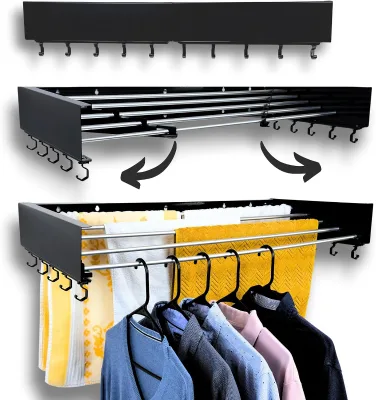
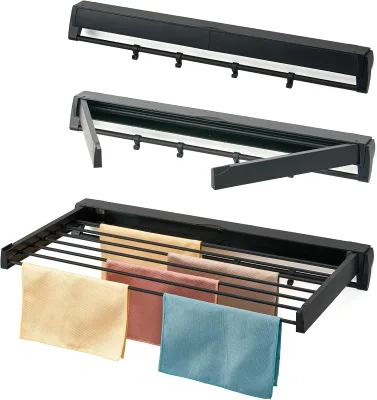


Comprehensive Sourcing Guide
Adjustable Collapsible Clothes Drying Rack Sourcing Guide
Sourcing an adjustable collapsible clothes drying rack requires a careful balance between structural integrity, space-saving functionality, and material durability. These products are ubiquitous in both residential and commercial settings, serving as essential tools for laundry management where indoor drying is necessary due to weather, space constraints, or hygiene considerations. The market offers a wide variety of designs, ranging from simple plastic hangers to complex, multi-tiered metal racks with electrical components. Buyers must navigate this diversity by focusing on specific use cases, such as hotel amenities, home garden use, or professional garment care, to ensure the selected product aligns with their target audience's needs.
The procurement process for these items is influenced by significant variations in manufacturing complexity. While some variants are basic plastic components with minimal assembly, others involve intricate metal frameworks, folding mechanisms, and even electrical drive systems for lifting or pressing functions. Understanding these distinctions is critical for accurate cost estimation and quality control. Buyers should prioritize suppliers who demonstrate clear engineering capabilities for the specific type of rack they intend to source, whether it is a lightweight, portable unit for personal use or a heavy-duty, commercial-grade solution for hospitality environments.
Product Scope and Observed Listing Signals
The current market landscape for adjustable collapsible clothes drying racks exhibits a broad spectrum of product types, driven by diverse application requirements. Observed listings indicate a strong presence of products designed for specific environments, such as hotels and homes, with features tailored to daily use and garden settings. For instance, some models are explicitly marketed for tops, trousers, and underwear, highlighting their versatility in handling different garment types. Others are designed with a modern aesthetic and easy-to-clean surfaces, appealing to consumers who value both functionality and interior design integration. This diversity suggests that buyers should not assume a one-size-fits-all approach but rather segment their sourcing strategy based on the intended end-user scenario.
Technical attributes observed in the market further illustrate the complexity of this category. There are products featuring manual drive types alongside those with electrical drives, indicating a split between traditional mechanical designs and more advanced, motorized solutions. Some racks are described as having a double-pole structure and being liftable, which points to specialized designs for maximizing vertical space or accommodating bulky items. Additionally, the presence of features like trouser presses and slip-resistant handles underscores the importance of user safety and garment care in product design. Buyers must carefully review these specifications to ensure the selected product meets the functional demands of their specific market segment, avoiding mismatches between product capabilities and user expectations.
Technical Specifications to Verify
When evaluating technical specifications, dimensional accuracy and structural tolerance are paramount for ensuring product quality and user satisfaction. Buyers should verify that the product dimensions align with the stated standards, such as the observed range of 19.7"D x 49.7"W x 67.7"H for certain models, to ensure they fit within intended storage or usage spaces. Furthermore, dimensional tolerances should be strictly controlled, with observed standards indicating a tolerance of less than ±1mm for critical components. This level of precision is essential for the smooth operation of folding mechanisms and the stability of the rack when loaded with garments. Deviations from these tolerances can lead to assembly issues, instability, or premature wear of moving parts.
Material selection and weight specifications also play a crucial role in determining the durability and portability of the drying rack. Observed data indicates the use of both plastic and metal materials, each offering distinct advantages in terms of cost, weight, and strength. For plastic components, weight consistency is vital, with observed tolerances of less than ±5 percent including packaging. This ensures that each unit performs similarly and meets quality expectations. Additionally, the weight of individual components, such as the observed 37g for certain parts, should be considered in the context of overall product portability. Buyers should request detailed material specifications and weight data to assess the balance between durability and ease of use, ensuring the product meets the physical requirements of its intended application.
Compliance and Safety Documentation
Safety features are a critical consideration when sourcing clothes drying racks, particularly those with moving parts or electrical components. Observed products include safety features such as slip-resistant handles, which are essential for preventing accidents during use, especially when the rack is loaded with heavy, wet garments. Buyers must verify that these safety features are not only present but also effectively integrated into the product design. For electrical models, compliance with relevant electrical safety standards is mandatory to prevent hazards such as electric shock or fire. Although specific certification statuses are not provided in the observed data, buyers should insist on documentation proving compliance with local and international safety regulations, such as UL or CE marking, depending on the target market.
In addition to physical safety, documentation related to material safety and environmental compliance is increasingly important. Buyers should request material safety data sheets (MSDS) for any plastic or metal components to ensure they are free from harmful substances like lead or phthalates. This is particularly relevant for products intended for home use, where prolonged contact with users is likely. Furthermore, if the product is marketed for use in hotels or other commercial settings, buyers should verify that the materials meet fire resistance and hygiene standards. Clear and comprehensive safety documentation not only protects the buyer from liability but also enhances the product's credibility and marketability to end consumers.
Cost Drivers and Commercial Terms
The cost of adjustable collapsible clothes drying racks is influenced by several key factors, including material costs, manufacturing complexity, and packaging requirements. Observed price ranges vary significantly, from as low as $0.47 for simple components to $89.99 for more complex, fully assembled units. This wide range reflects the diversity in product design and functionality. Buyers should analyze the cost structure in relation to the product's features, such as the presence of electrical drives or specialized folding mechanisms, to ensure they are paying a fair price for the value provided. Additionally, the choice of material, whether plastic or metal, will have a direct impact on the unit cost, with metal generally being more expensive due to material and processing costs.
Commercial terms, including minimum order quantities (MOQ) and packaging specifications, also play a significant role in the total cost of ownership. Observed MOQs range from 1 to 1000 units, with some suppliers requiring higher volumes, such as 5000 pieces, for certain product lines. Buyers should negotiate MOQs that align with their inventory management strategy and market demand forecasts to avoid excess stock or stockouts. Packaging is another critical cost driver, with observed options including paper boxes and OPP bags. The choice of packaging affects not only the unit cost but also the shipping efficiency and product protection during transit. Buyers should consider the balance between cost-effective packaging and the need for robust protection to minimize damage during shipping.
Supplier Qualification and Quality Control
Supplier qualification is a critical step in ensuring the reliability and consistency of the sourced products. Buyers should verify the supplier's manufacturing capabilities, including their experience with the specific type of drying rack they intend to source. Observed data indicates that suppliers are located in regions such as Jiangsu, China, which is known for its manufacturing expertise in home goods and hardware. Buyers should request evidence of the supplier's production capacity, quality management systems, and past performance with similar products. Additionally, the availability of OEM and ODM services, as observed in some listings, can be a valuable asset for buyers looking to customize products to their specific brand requirements.
Quality control measures must be rigorously implemented to ensure that the final products meet the specified standards. Buyers should establish clear quality criteria, including dimensional accuracy, material integrity, and functional performance, and communicate these to the supplier. Regular inspections, both during production and before shipment, are essential to identify and rectify any defects early in the process. Observed specifications, such as the carton size of 62.54043.5cm and the packing quantity of 10 pieces per OPP bag, should be verified to ensure consistency in packaging and labeling. By maintaining strict quality control protocols, buyers can minimize the risk of receiving substandard products and protect their brand reputation.
Long-Term Procurement Checks
Long-term procurement success depends on the ability to adapt to changing market conditions and customer preferences. Buyers should regularly review product performance and customer feedback to identify areas for improvement or new opportunities. For example, if customers express a preference for more durable materials or additional features, buyers should work with suppliers to incorporate these changes into future orders. Additionally, staying informed about industry trends, such as the growing demand for eco-friendly materials or smart home integration, can help buyers stay ahead of the competition. By maintaining a proactive approach to product development and market analysis, buyers can ensure their sourcing strategy remains relevant and competitive.
Sustainability and ethical sourcing are also becoming increasingly important considerations for long-term procurement. Buyers should evaluate their suppliers' environmental practices and social responsibility policies to ensure they align with their own corporate values. This may include verifying that materials are sourced from sustainable suppliers, that manufacturing processes minimize waste and energy consumption, and that workers are treated fairly. By prioritizing sustainability and ethical practices, buyers can enhance their brand image, meet the expectations of environmentally conscious consumers, and mitigate risks associated with supply chain disruptions. Regular audits and continuous improvement initiatives are essential to maintaining high standards in these areas.
FAQs
What customization options are available for the drying rack?
Customization is available for this product line. Buyers can request specific modifications to meet unique requirements by contacting the supplier directly for OEM and ODM services.
Which materials are used to construct the drying rack?
The drying rack is constructed using durable plastic and metal materials. These materials ensure the product remains sturdy while being lightweight for easy handling and transport during daily use.
Can the drying rack be folded for storage?
Yes, the drying rack features a foldable design for convenient storage. This attribute allows users to save space when the unit is not in use, making it ideal for home or hotel environments.
What is the minimum order quantity for this product?
The minimum order quantity varies by specific model, with observed values ranging from 1 to 5000 pieces. Buyers should check the specific model details to confirm the exact MOQ required for their order.
How is the product packaged for shipment?
The product is packaged in paper boxes or OPP bags depending on the model. Specific packing details include 10 pieces per OPP bag or individual paper box packaging for protection during transit.
Where is the product manufactured?
The product originates from China, specifically from the Jiangsu region. This location is a known manufacturing hub for various home and garden products including clothing racks and hangers.
What are the standard dimensions of the drying rack?
Standard dimensions vary by model, with sizes such as 14x7x1.4 cm or 19.7x49.7x67.7 inches observed. Buyers should verify the specific model number to confirm the exact dimensional tolerance and size.